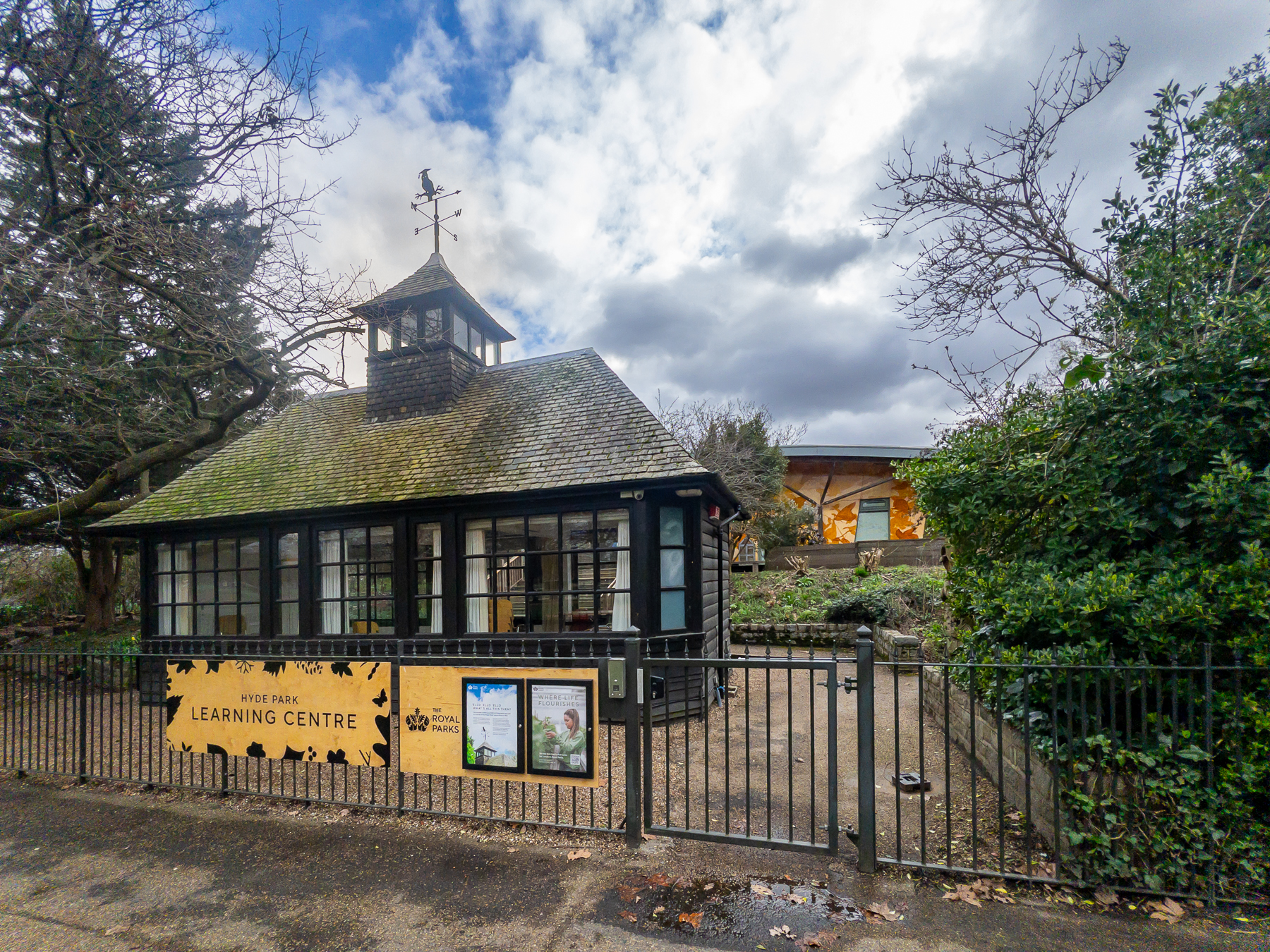
Over four days at various times in March and April, I visited Hyde Park, Kensington Gardens and Richmond Park in London introduce Royal Parks volunteers and the public to the remarkable but overlooked world of lichens. It was a real pleasure return again, after my first public lichen walks in Kensington Gardens last year.
My first stop was the Hyde Park Learning Centre, where I led two groups of Royal Parks volunteers in a lichen workshop. The eight Royal Parks in London span about 5,000 acres, and the charity depends on the help of many hundreds of volunteers. Some help with parkland management and conservation. Some welcome visitors to the park, and help them to appreciate park wildlife and ecosystems.
Every park volunteer who knows how to interpret and understand lichens can act as a guide to their hidden world, helping park staff and the public alike to see and protect them. We began with a ‘classroom’ introduction to lichens, but our training also involved a stroll out of the Learning Centre to observe lichens in the park.
We didn’t have to go far! Indeed, the large boulders in the Learning Centre garden offered some of the most interesting lichens, including the first record of Porpidia tuberculosa for Hyde Park and Kensington Gardens. And blown down from the green roof of the Learning Centre itself were clumps of Peltigera canina and P. rufescens, both first records not only for the park, but for VC21 Middlesex, which spans much of London north of the Thames.
My second stop was Kensington Gardens, where I led two lichen walks for the public. I varied the route a bit from my walks last year, to take in a spiral sculpture of boulders on Buck Hill. On the boulders was a tiny specimen of Myriolecis smaragdula, a common lichen but also the first record for VC21 Middlesex. Exciting for the public participants!
Finally, I visited Richmond Park over two days in April, leading lichen training for two groups of volunteers at Holly Lodge on the first day, and two public lichen walks from Pembroke Lodge on the second day.
Richmond Park is huge, with many different lichen habitats, and it was possible only to cover a very small part during the training and walks. But it’s also greatly under-recorded for lichens, and we were pleased to find many first records for the park! I’ve listed all the Richmond records at the end of this post, considering the comparative lack of records there.
Feedback from participants was wonderfully positive:
Interesting speaker with a wealth of knowledge. His passion for lichens was infectious. Learned tonnes and enjoyed every minute. Thank you!
The expert was fantastic a good speaker who communicated his subject in a way we could all understand with humour!!”
“Oh love and marriage, a lichen and how they thrive…another world. Incredibly interesting and new to me
Oh such a joy, raised my mood too and what a world of lichen awaits me.
Such a joy for me as well, and I very much hope to return to the Royal Parks for more lichen training and walks! Many thanks to Gemma Hindi for inviting me back this year.
Richmond : Richmond Park : VC17 Surrey : TQ1973 : 10 April 2026
Anthony is the field lichenologist behind Aspen Ecology. A committed naturalist, educator and communicator, he is a knowledgeable guide and responsive advisor on the remarkable world of lichens.
The field notes and lab notes for various lichen species on this website refer to special field-lichenological techniques. Examples include collecting lichens in the field, testing lichens with chemicals and ultraviolet light, and dissecting lichens with razors or other sharp tools.
These and other field-lichenological techniques require special knowledge and experience. They also demand an ethics of respect for lichens and other wildlife, for conservationally significant species and sites, and for land and landowners.
You should not attempt any of these techniques if you lack the necessary knowledge, experience or ethical sense. You should also take all relevant safety precautions. More information about field-lichenological safety and ethics is available from the British Lichen Society .