
| TAXON: | Hypotrachyna laevigata (Sm.) Hale (1975) |
| RECENT SYNONYMS: | – |
| FAMILY: | Parmeliaceae |
| GROWTH FORM: | Foliose, heteromerous |
| SUBSTRATES: | Well-lit, acid-leached bark; rarely mossy rocks or coastal cliffs |
| PHOTOBIONT: | Trebouxioid alga |
| REPRODUCTION: | Soredia; apothecia and pycnidia rare |
| ASCUS: | If present, cylindric-clavate; apex Lecanora-type; 8 spores |
| SPORES: | Ascospores if present ellipsoidal, 12.5-13.5 × ~5 µm in British material; conidia if present double-spindle-shaped (bifusiform), 4-6(-7.5) × ~1 µm |
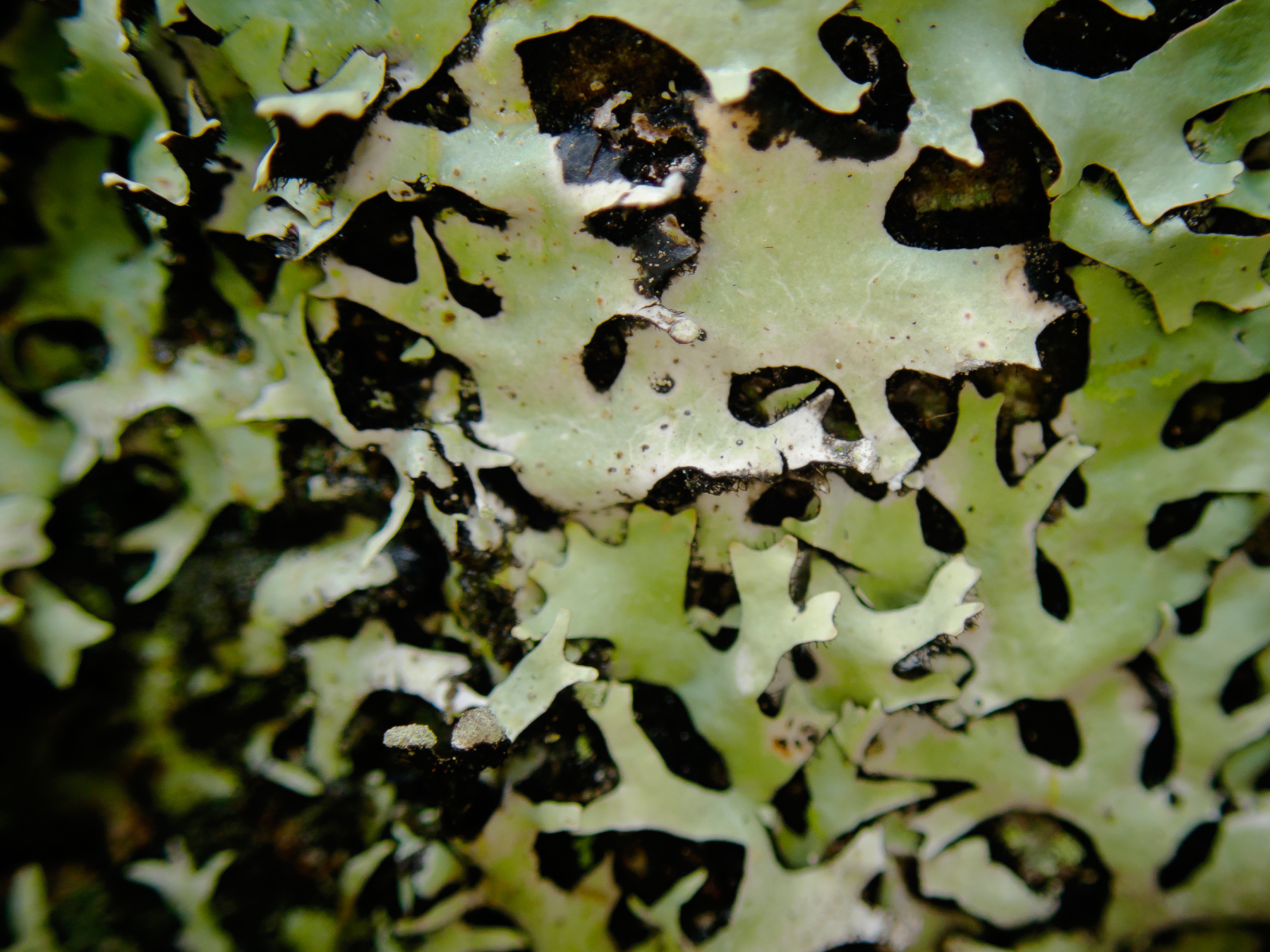
| NOTABLE FEATURES: | Upper cortex grey-green; medulla white; lower cortex black with brown margin and abundant, black, branching rhizines; lobes long, branching, sometimes overlapping, with ‘torn’ or ‘shredded’ look from truncated or pointed apices and often angular axils; soralia roughly globular, forming on lobe tips, with coarse, grey-green soredia |
| CHEMICAL TESTS: | Cortex K+ yellow, K/UV(dry)+ yellow (atranorin); medulla and soralia C+ orange, KC+ deep orange, UV± bluish-gray (barbatic acid and related) |
| HABITAT: | Damp, oceanic oak woodland, birch woodland or willow carr, with at least 127 cm and 180 days of rain per year |
| DISTRIBUTION: | Locally abundant in western Britain |
| CONSERVATION STATUS: | Least Concern |
| LICHENICOLOUS FUNGI: | Briancoppinsia cytospora, Lichenoconium erodens, Nectriopsis rubefaciens, Nigromacula uniseptata, Spirographa |
| IDENTIFICATION DIFFICULTY: | Green 2: Field identification possible with care |
| CONFUSION SPECIES: | Hypotrachyna endochlora |
FIELD NOTES
To be added.
LAB NOTES
Hypotrachyna laevigata can be identified without microscopy.
SPECIMENS
Hypotrachyna laevigata : Scotland : VC101 Kintyre : NR7789 : August 2024 : On Betula trunk : © Anthony Speca : CC BY-SA 4.0
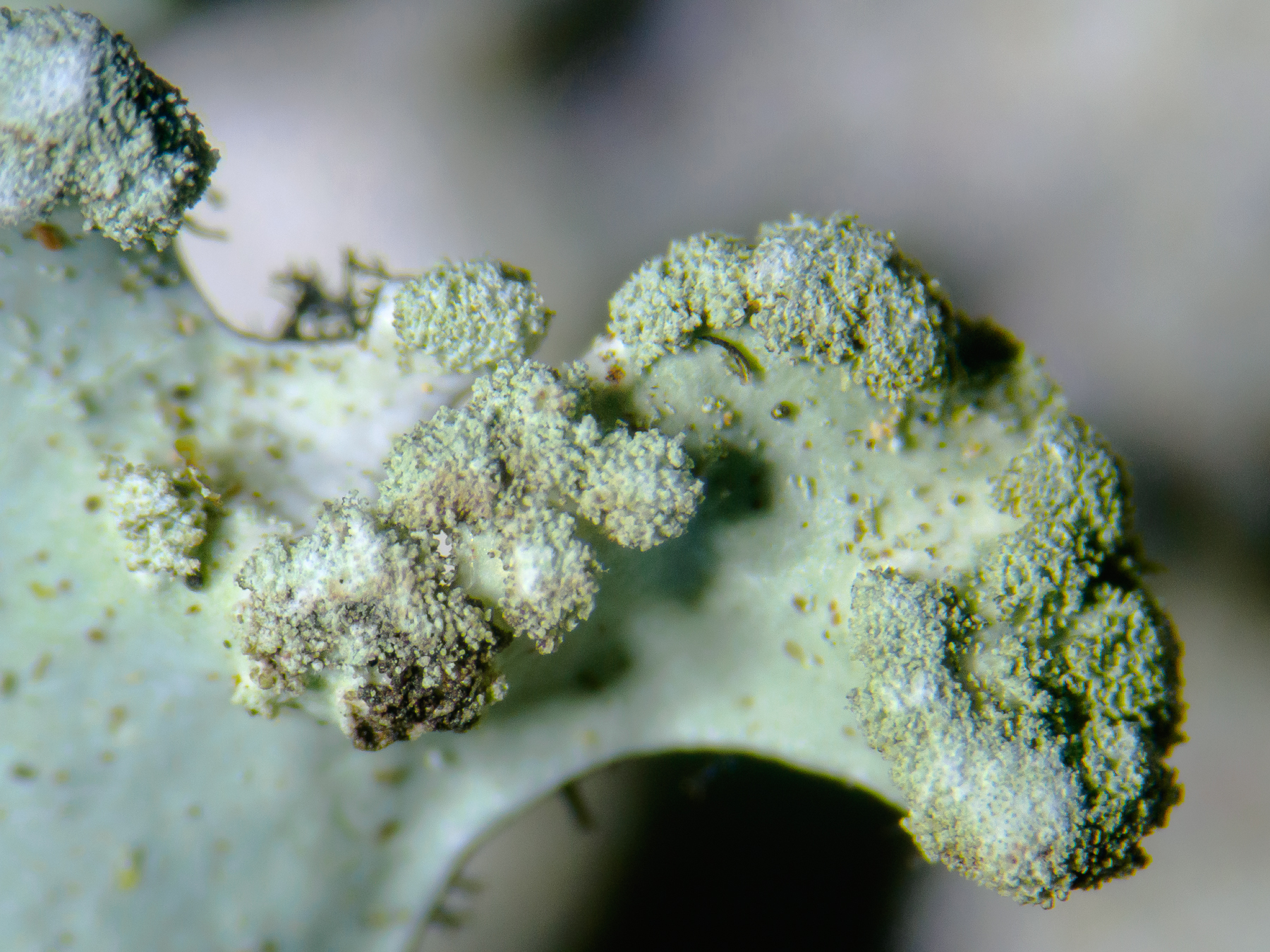


Hypotrachyna laevigata : Scotland : VC98 Argyll : NR8295 : July 2025 : On unknown bark : © Anthony Speca : CC BY-SA 4.0


