| TAXON: | Xanthoparmelia conspersa (Ehrh. ex Ach.) Hale (1974) |
| RECENT SYNONYMS: | – |
| FAMILY: | Parmeliaceae |
| GROWTH FORM: | Foliose, heteromerous |
| SUBSTRATES: | Well-lit siliceous rocks, worked stone and roof tiles, often in rain or seepage tracks; rarely on lignum and acid bark |
| PHOTOBIONT: | Trebouxioid alga |
| REPRODUCTION: | Isidia; occasionally apothecia, pycnidia |
| ASCUS: | Where present, cylindric-clavate; apex Lecanora-type; 8 spores |
| SPORES: | Where present, ascospores ellipsoid, 6-10 × 4-5 µm; conidia cylindrical, 4-5 × ~1 µm |
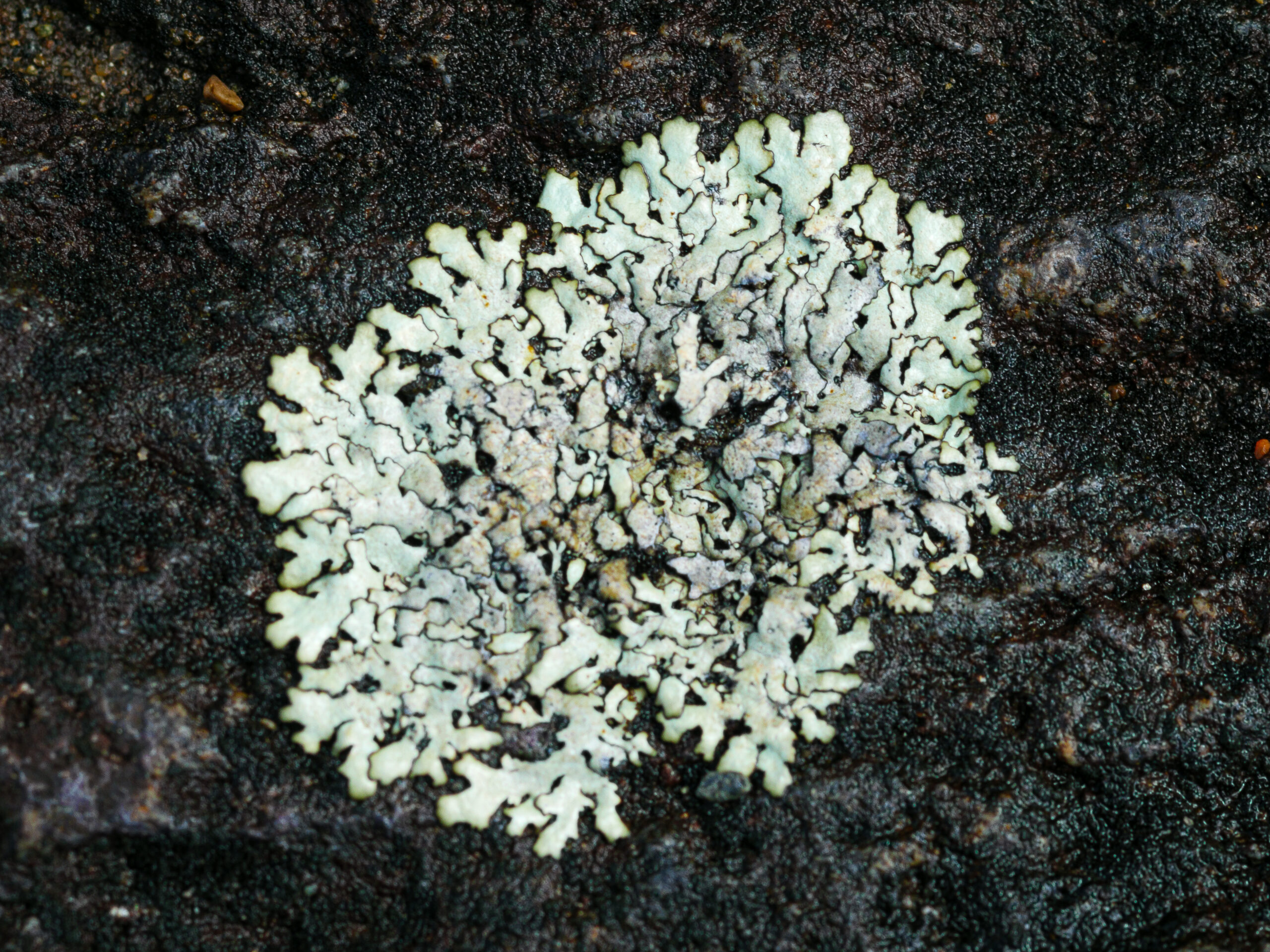
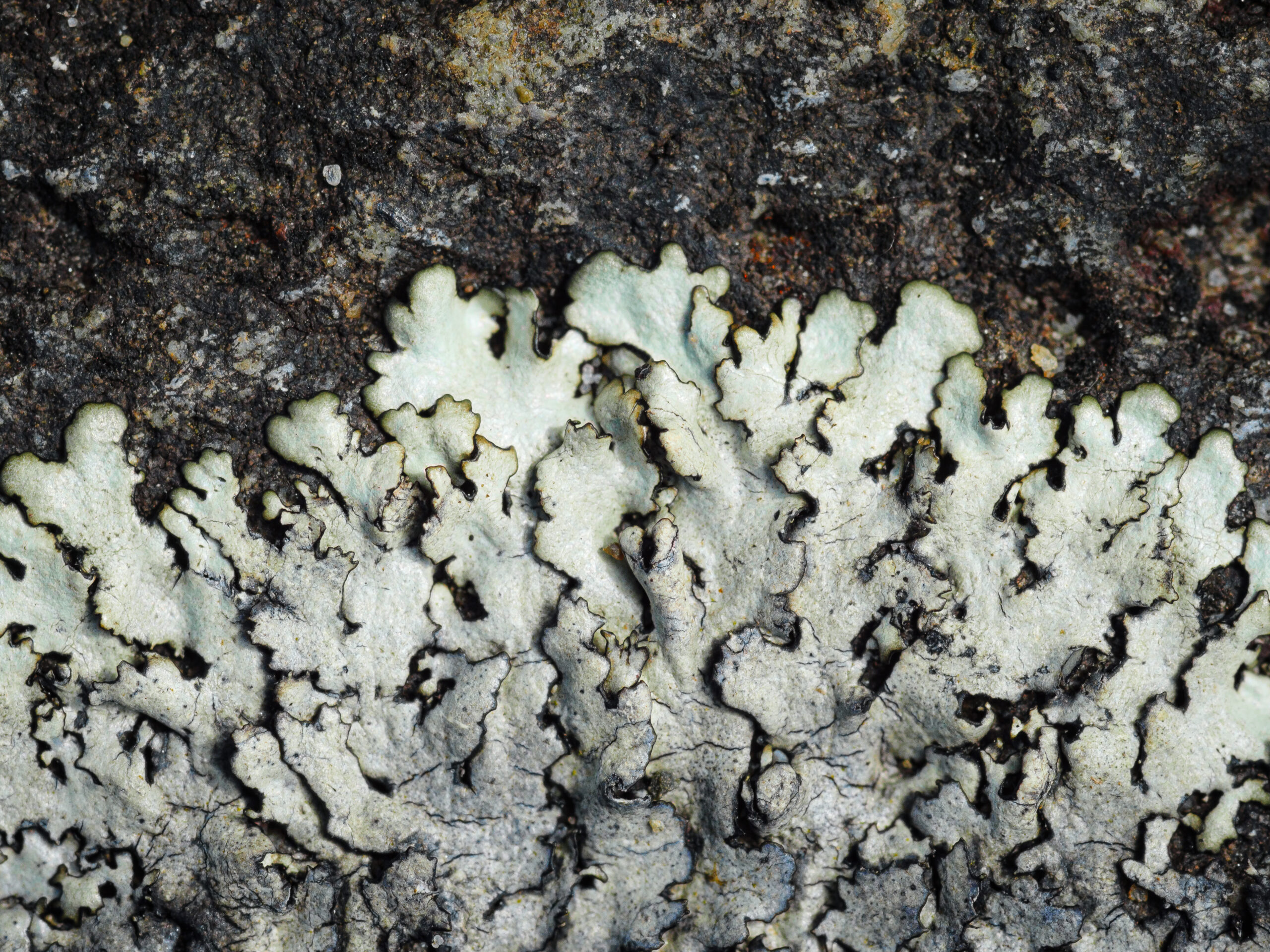
| NOTABLE FEATURES: | Thallus silvery grey-green, shiny, large, rosette-forming or often coalescing into large patches; lobes radiating, overlapping, closely adpressed, often cracked; underside black; rhizines black, short, unbranched; isidia highly variable, from short, globose and sparse, to coralloid, cylindrical and so abundant as to form a crust; occasional apothecia with crenulate thalline margins and red-brown discs |
| CHEMICAL TESTS: | Medulla K+ yellow-orange, KC+ orange-red, Pd+ orange (usnic and stictic acids, with minor amounts of usnic, constictic, norstictic and cryptostictic acids) |
| HABITAT: | Mainly oceanic and sub-oceanic habitats where suitable substrate available |
| DISTRIBUTION: | Common in northern and western Britain; rarer in eastern Britain |
| CONSERVATION STATUS: | Least Concern |
| LICHENICOLOUS FUNGI: | Abrothallus cetrariae, Lichenoconium usneae, Lichenostigma cosmopolites |
| IDENTIFICATION DIFFICULTY: | Green 1: Field identification possible |
| CONFUSION SPECIES: | – |
FIELD NOTES
To be added.
LAB NOTES
Xanthoparmelia conspersa can be identified without microscopy.
SPECIMENS
Xanthoparmelia conspersa : Scotland : VC97 West Inverness-shire : NM6793 : August 2025 : On siliceous boulder : © Anthony Speca : CC BY-SA 4.0
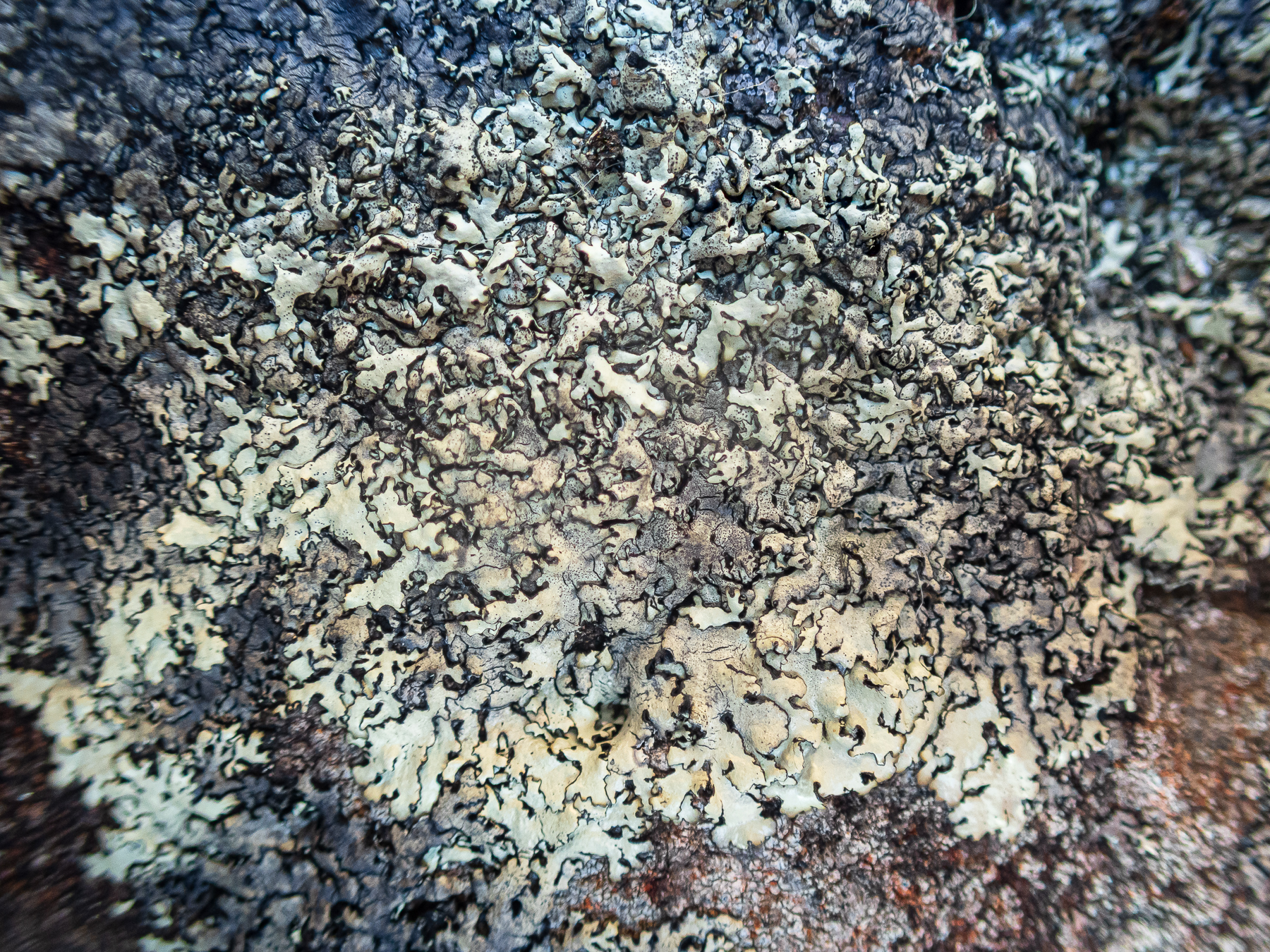
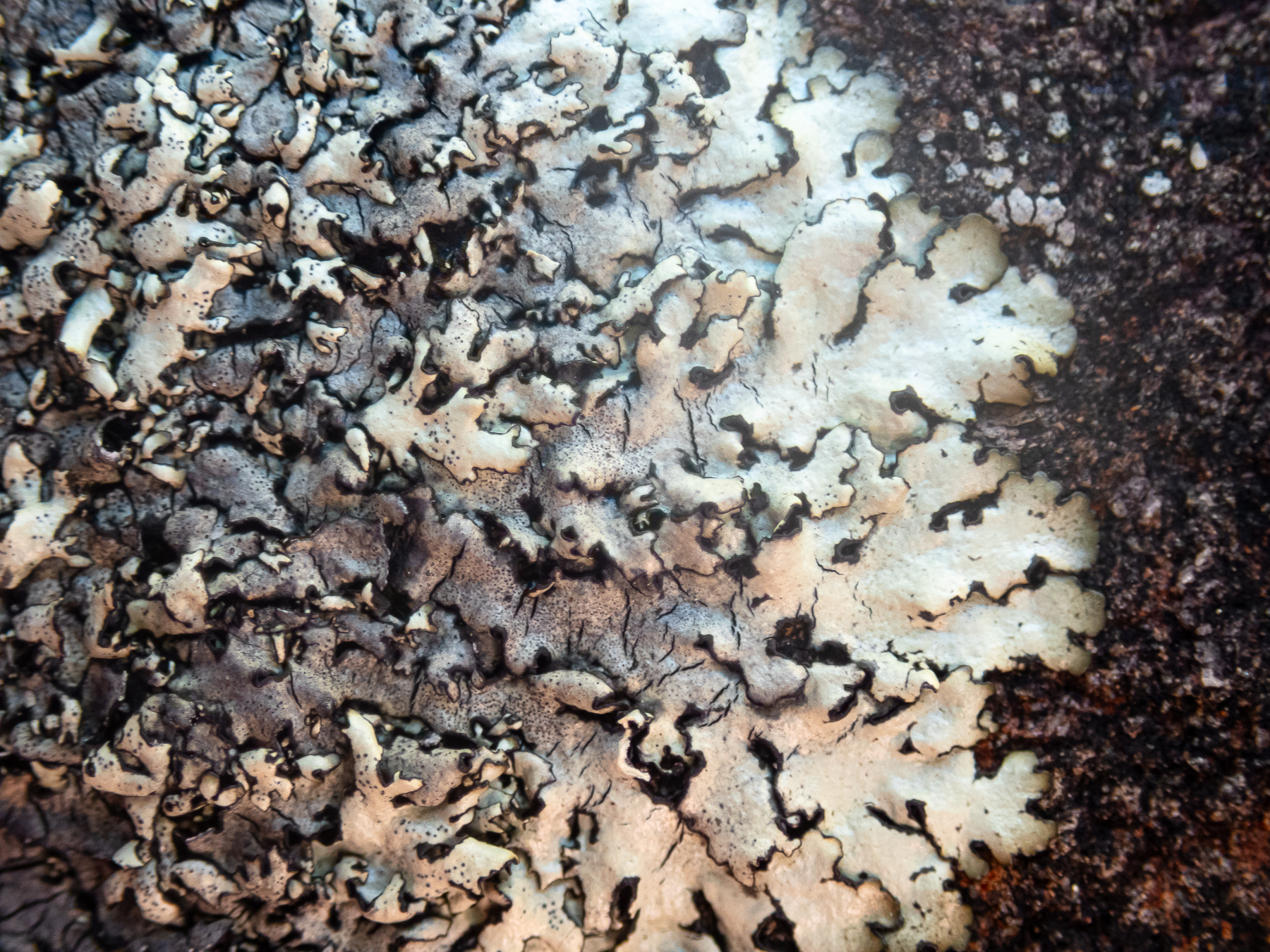

Xanthoparmelia conspersa : Scotland : VC98 Argyll : NR7993 : August 2022 : On siliceous boulder : © Anthony Speca : CC BY-SA 4.0